According to SPER Market Research, the Global Chemical Industrial Electric Boiler Market is estimated to reach USD 571 million by 2034 with a CAGR 16.48%.
Introduction and Overview
The report includes an in-depth analysis of the Global Chemical Industrial Electric Boiler Market, including market size and trends, product mix, Applications, and supplier analysis.
The global Chemical Industrial Electric Boiler Market was valued at USD 124.2 million in 2024 and is expected to grow at a CAGR of over 16.48% from 2025 to 2034. The accelerating clean energy transition and supportive government incentive programs for efficient heating solutions are strengthening the industry landscape. Continuous advancements in electric boiler technology, integrated with sophisticated control systems such as IoT sensors and automation, are expanding market opportunities. These innovations enable real-time monitoring, predictive maintenance, and optimized energy consumption, improving efficiency while reducing downtime in chemical processing facilities. Growing demand for customized systems designed to meet precise process requirements allows chemical manufacturers to adopt varying capacities with minimal modifications to existing infrastructure. Enhanced reliability and accurate temperature control further position electric boilers as an ideal solution for chemically intensive processes, driving sustained industrial demand.
By Voltage Rating:
Based on voltage classification, the market is divided into low and medium voltage systems. Growing adoption of electric heating solutions offering rapid start-up and accurate temperature control, which are essential for continuous heat-dependent chemical processes, is supporting market growth. The low voltage segment is expanding due to stricter regulations aimed at reducing fossil fuel usage, along with clean energy incentives, compact design, and low maintenance requirements. Meanwhile, the medium voltage segment benefits from advanced insulation, efficient heating components, and intelligent load management, enabling seamless renewable integration, precise thermal control, and stronger support for industrial decarbonization initiatives.
By capacity:
Based on capacity, the market is segmented into 10 MMBTU/hr, 10–50 MMBTU/hr, 50–100 MMBTU/hr, 100–250 MMBTU/hr, and above 250 MMBTU/hr. The 10 MMBTU/hr segment accounted for a 37% share in 2024, driven by expanding chemical infrastructure and growing adoption of high-efficiency electric boilers. The 10–50 MMBTU/hr range is witnessing strong growth through 2034 due to its optimal energy output, precise operational control, and compact design suited for medium-scale chemical processes. Higher capacity segments, including 50–100 MMBTU/hr and 100–250 MMBTU/hr, are increasingly adopted for large chemical operations requiring continuous, reliable, and energy-efficient steam generation with enhanced safety and scalability.
Regional Insights:
The U.S. chemical industrial electric boiler market has shown steady growth in recent years, supported by extended clean energy tax credits and rising international agreements promoting electrification. Across North America, strong industrial activity, continuous technological innovation, and increasing collaboration between private companies and state governments to enhance industrial infrastructure are accelerating market expansion. Regulatory initiatives supporting clean electricity are further reinforcing this trend. In Europe, stringent carbon emission regulations and the growing adoption of alternative heating technologies are strengthening market penetration. Additionally, the rising use of on-site renewable energy systems is positively shaping the regional business landscape.
Market Competitive Landscape:
The Chemical Industrial Electric Boiler Market is highly consolidated. Some of the market key players are ALFA LAVAL, Babcock Wanson, Bosch Industriekessel, Cleaver-Brooks, Chromalox, Danstoker A/S, FERROLI, PARAT Halvorsen AS, Precision Boilers, Thermodyne Boilers, Thermon, and Vapor Power.
Recent Developments:
• In February 2025, Cleaver-Brooks introduced the LVR electric hydronic boiler, designed to deliver near-total efficiency with zero onsite emissions. The unit features the company’s proprietary modular design, allowing easy scalability and seamless integration with renewable energy systems. Equipped with advanced PLC-based controls, the LVR supports a wide range of power outputs. Its compact footprint simplifies installation while helping reduce operating expenses, making it a cost-effective and flexible solution for modern heating applications.
• In September 2024, Babcock Wanson introduced the LV chemical industrial electric boiler, delivering high steam output with operating pressure up to industrial standards. The boiler achieves over 99% efficiency with zero CO₂ and NOx emissions, converting electrical energy directly into heat. Its all-electric design eliminates the need for fuel systems, emission monitoring, or chimneys, allowing for simplified installation and faster deployment in chemical facilities.
Scope of the report:
Report Metric Details
Market size available for the years 2021-2034
Base year considered 2024
Forecast Period 2025-2034
Segments Covered By Voltage Rating, By Capacity, By Product, By Sales Channel
Regions Covered North America, Latin America, Asia-Pacific, Europe, and Middle East & Africa
Companies Covered ALFA LAVAL, Babcock Wanson, Bosch Industriekessel, Cleaver-Brooks, Chromalox, Danstoker A/S, FERROLI, PARAT Halvorsen AS, Precision Boilers, Thermodyne Boilers, Thermon, and Vapor Power.
Key Topics Covered in the Report
• Global Chemical Industrial Electric Boiler Market Size (FY’2021-FY’2034)
• Overview of Global Chemical Industrial Electric Boiler Market
• Segmentation of Global Chemical Industrial Electric Boiler Market By Voltage Rating (Low voltage, Medium voltage)
• Segmentation of Global Chemical Industrial Electric Boiler Market By Capacity (10 MMBTU/hr, 10 - 50 MMBTU/hr, 50 - 100 MMBTU/hr, 100 - 250 MMBTU/hr, > 250 MMBTU/hr)
• Segmentation of Global Chemical Industrial Electric Boiler Market By Product (Hot water, Steam)
• Segmentation of Global Chemical Industrial Electric Boiler Market By Sales Channel (Online, Dealer, Retail)
• Statistical Snap of Global Chemical Industrial Electric Boiler Market
• Expansion Analysis of Global Chemical Industrial Electric Boiler Market
• Problems and Obstacles in Global Chemical Industrial Electric Boiler Market
• Competitive Landscape in the Global Chemical Industrial Electric Boiler Market
• Details on Current Investment in Global Chemical Industrial Electric Boiler Market
• Competitive Analysis of Global Chemical Industrial Electric Boiler Market
• Prominent Players in the Global Chemical Industrial Electric Boiler Market
• SWOT Analysis of Global Chemical Industrial Electric Boiler Market
• Global Chemical Industrial Electric Boiler Market Future Outlook and Projections (FY’2025-FY’2034)
• Recommendations from Analyst
Global Chemical Industrial Electric Boiler Market Size- By Voltage Rating, By Capacity, By Product, By Sales Channel- Regional Outlook, Competitive Strategies and Segment Forecast to 2034
1. Introduction
1.1. Scope of the report
1.2. Market segment analysis
2. Research Methodology
2.1. Research data source
2.1.1. Secondary Data
2.1.2. Primary Data
2.1.3. SPER’s internal database
2.1.4. Premium insight from KOL’s
2.2. Market size estimation
2.2.1. Top-down and Bottom-up approach
2.3. Data triangulation
3. Executive Summary
4. Market Dynamics
4.1. Driver, Restraint, Opportunity and Challenges analysis
4.1.1. Drivers
4.1.2. Restraints
4.1.3. Opportunities
4.1.4. Challenges
5. Market variable and outlook
5.1. SWOT Analysis
5.1.1. Strengths
5.1.2. Weaknesses
5.1.3. Opportunities
5.1.4. Threats
5.2. PESTEL Analysis
5.2.1. Political Landscape
5.2.2. Economic Landscape
5.2.3. Social Landscape
5.2.4. Technological Landscape
5.2.5. Environmental Landscape
5.2.6. Legal Landscape
5.3. PORTER’s Five Forces
5.3.1. Bargaining power of suppliers
5.3.2. Bargaining power of buyers
5.3.3. Threat of Substitute
5.3.4. Threat of new entrant
5.3.5. Competitive rivalry
5.4. Heat Map Analysis
6. Competitive Landscape
6.1. Global Chemical Industrial Electric Boiler Market Manufacturing Base Distribution, Sales Area, Product Type
6.2. Mergers & Acquisitions, Partnerships, Product Launch, and Collaboration in Global Chemical Industrial Electric Boiler Market
7. Global Chemical Industrial Electric Boiler Market, By Voltage Rating, (USD Million) 2021-2034
7.1. Low voltage
7.2. Medium voltage
8. Global Chemical Industrial Electric Boiler Market, By Capacity, (USD Million) 2021-2034
8.1. 10 MMBTU/hr
8.2. 10 - 50 MMBTU/hr
8.3. 50 - 100 MMBTU/hr
8.4. 100 - 250 MMBTU/hr
8.5. > 250 MMBTU/hr
9. Global Chemical Industrial Electric Boiler Market, By Product, (USD Million) 2021-2034
9.1. Hot water
9.2. Steam
10. Global Chemical Industrial Electric Boiler Market, By Sales Channel, (USD Million) 2021-2034
10.1. Online
10.2. Dealer
10.3. Retail
11. Global Chemical Industrial Electric Boiler Market, (USD Million) 2021-2034
11.1. Global Chemical Industrial Electric Boiler Market Size and Market Share
12. Global Chemical Industrial Electric Boiler Market, By Region, 2021-2034 (USD Million)
12.1. Asia-Pacific
12.1.1. Australia
12.1.2. China
12.1.3. India
12.1.4. Japan
12.1.5. South Korea
12.1.6. Rest of Asia-Pacific
12.2. Europe
12.2.1. France
12.2.2. Germany
12.2.3. Italy
12.2.4. Spain
12.2.5. United Kingdom
12.2.6. Rest of Europe
12.3. Middle East and Africa
12.3.1. Kingdom of Saudi Arabia
12.3.2. United Arab Emirates
12.3.3. Qatar
12.3.4. South Africa
12.3.5. Egypt
12.3.6. Morocco
12.3.7. Nigeria
12.3.8. Rest of Middle-East and Africa
12.4. North America
12.4.1. Canada
12.4.2. Mexico
12.4.3. United States
12.5. Latin America
12.5.1. Argentina
12.5.2. Brazil
12.5.3. Rest of Latin America
13. Company Profile
13.1. ALFA LAVAL
13.1.1. Company details
13.1.2. Financial outlook
13.1.3. Product summary
13.1.4. Recent developments
13.2. Babcock Wanson
13.2.1. Company details
13.2.2. Financial outlook
13.2.3. Product summary
13.2.4. Recent developments
13.3. Bosch Industriekessel
13.3.1. Company details
13.3.2. Financial outlook
13.3.3. Product summary
13.3.4. Recent developments
13.4. Cleaver-Brooks
13.4.1. Company details
13.4.2. Financial outlook
13.4.3. Product summary
13.4.4. Recent developments
13.5. Chromalox
13.5.1. Company details
13.5.2. Financial outlook
13.5.3. Product summary
13.5.4. Recent developments
13.6. Danstoker A/S
13.6.1. Company details
13.6.2. Financial outlook
13.6.3. Product summary
13.6.4. Recent developments
13.7. FERROLI
13.7.1. Company details
13.7.2. Financial outlook
13.7.3. Product summary
13.7.4. Recent developments
13.8. PARAT Halvorsen AS
13.8.1. Company details
13.8.2. Financial outlook
13.8.3. Product summary
13.8.4. Recent developments
13.9. Precision Boilers
13.9.1. Company details
13.9.2. Financial outlook
13.9.3. Product summary
13.9.4. Recent developments
13.10. Thermodyne Boilers
13.10.1. Company details
13.10.2. Financial outlook
13.10.3. Product summary
13.10.4. Recent developments
13.11. Thermon
13.11.1. Company details
13.11.2. Financial outlook
13.11.3. Product summary
13.11.4. Recent developments
13.12. Vapor Power
13.12.1. Company details
13.12.2. Financial outlook
13.12.3. Product summary
13.12.4. Recent developments
13.13. Others
14. Conclusion
15. List of Abbreviations
16. Reference Links
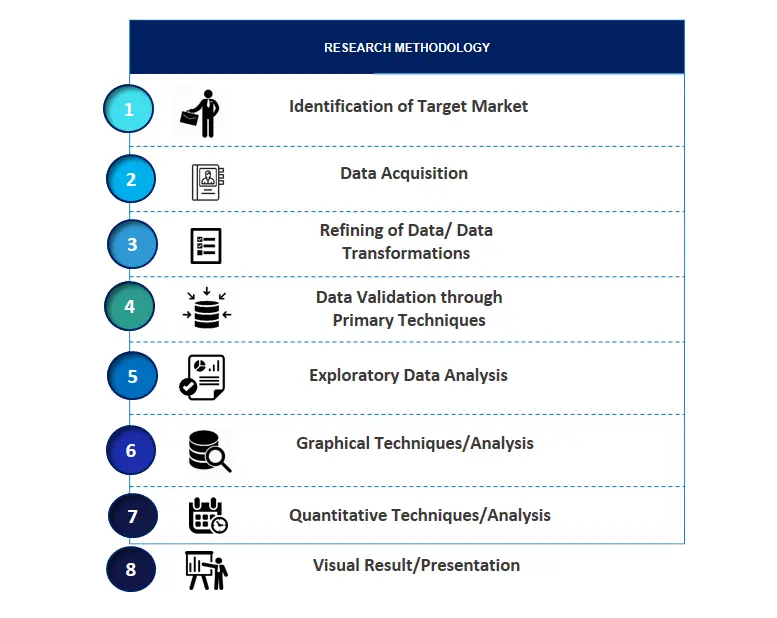
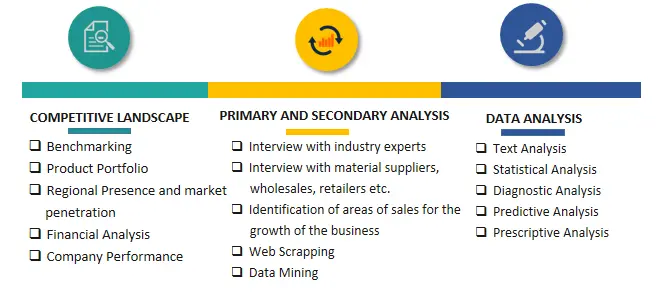
SPER Market Research’s methodology uses great emphasis on primary research to ensure that the market intelligence insights are up to date, reliable and accurate. Primary interviews are done with players involved in each phase of a supply chain to analyze the market forecasting. The secondary research method is used to help you fully understand how the future markets and the spending patterns look likes.
The report is based on in-depth qualitative and quantitative analysis of the Product Market. The quantitative analysis involves the application of various projection and sampling techniques. The qualitative analysis involves primary interviews, surveys, and vendor briefings. The data gathered as a result of these processes are validated through experts opinion. Our research methodology entails an ideal mixture of primary and secondary initiatives.